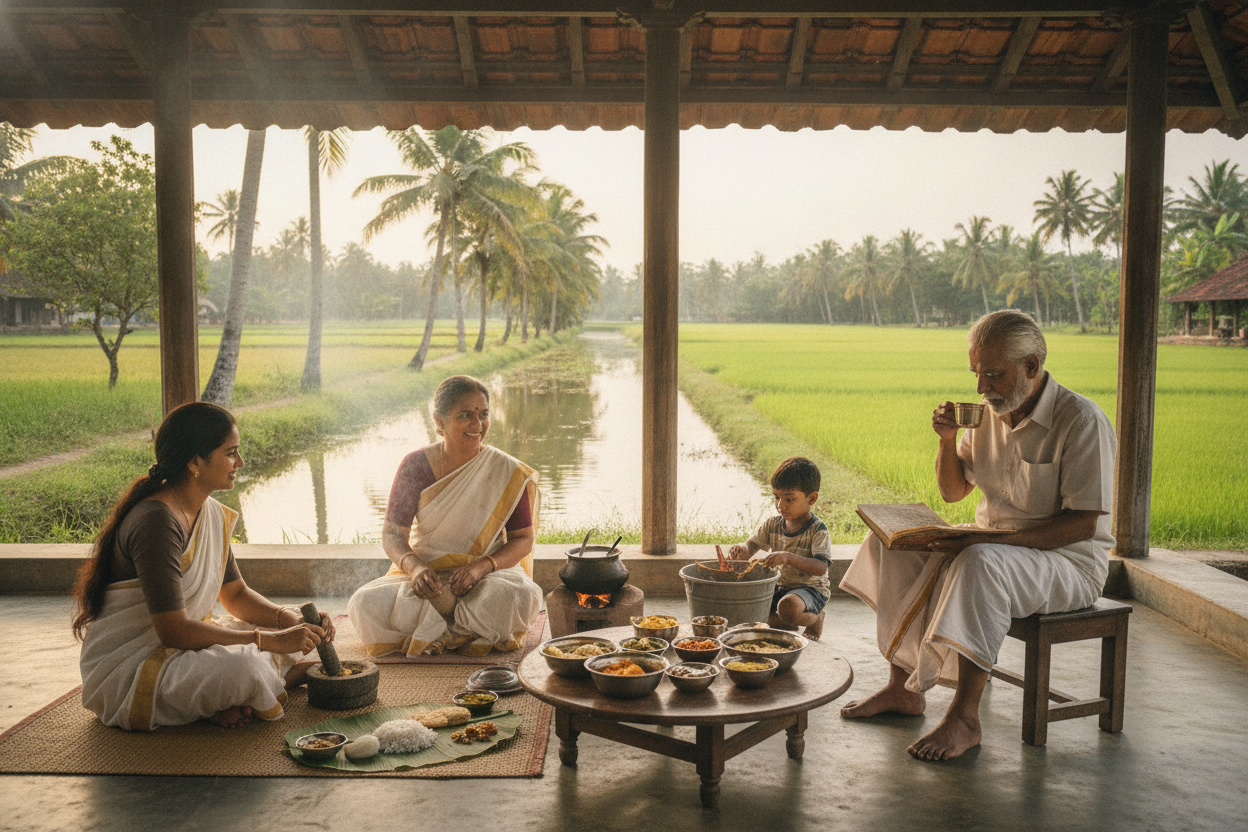
When people think about Kerala culture, festivals often come first. Yet culture lives just as strongly in the ordinary routines that do not always make headlines. The way people greet one another, cook daily meals, arrange family roles, speak in local idioms, or share stories at home all reveal cultural identity in quieter ways. These everyday details deserve attention because they show how culture functions beyond celebration.
Writing about Kerala culture beyond festivals also helps avoid a narrow view of tradition. Festivals are important, but they are not the whole picture. Daily life carries habits that are just as meaningful: tea-time conversations, the rhythm of local transport, neighborhood networks, and the relationship between home and community. These moments often tell readers more about a society than a single grand event can.
For long-form blogging, this subject works especially well because it invites layered description. You can move from the personal to the social, from memory to observation, and from the present to the past. That gives the article emotional depth without losing focus. It also helps readers recognize themselves in the details, which makes the writing feel intimate and true.
A thoughtful article on this theme can also connect culture with change. As Kerala becomes more urban, digital, and mobile, some daily customs shift while others remain steady. That tension is worth exploring. It shows that culture is not frozen; it is active, adaptable, and lived every day.
For readers of Chinthaakulam, this kind of article offers both familiarity and insight. It reminds them that culture is not only something to celebrate on special days. It is something they practice continuously, often without noticing, in the ordinary flow of life.